Injured in a Grand Prairie Car Accident? Moxie Law Group Can Help
Reviewed by Kara H. North, Managing Attorney at Moxie Law Group. Reviewed November 24, 2026.
Grand Prairie sits between Dallas and Fort Worth, and a lot of North Texas traffic runs straight through it on I-20, I-30, State Highway 360 and the President George Bush Turnpike. When a crash on one of those roads leaves you hurt, the at-fault driver’s insurance company starts building its case right away. Moxie Law Group helps injured drivers and passengers in Grand Prairie recover what a crash truly costs, so you can focus on getting better instead of arguing with an adjuster.
We work on contingency, so you pay nothing unless we win. Call us for a free consultation, and if you are dealing with a broader injury claim, our Grand Prairie personal injury lawyer page covers the rest of what we handle in the city.
How Often Crashes Happen in Grand Prairie
Car accidents in Grand Prairie are not rare events. According to the Texas Department of Transportation’s 2024 crash report for cities and towns, Grand Prairie had 2,983 reportable crashes in 2024. Those crashes included 20 fatal crashes that killed 23 people, 57 crashes with suspected serious injuries, 500 crashes with suspected minor injuries and 337 more with possible injuries (TxDOT, Crashes and Injuries by City 2024).
The longer view is similar. The City of Grand Prairie reports that over the past five years the city recorded 17,788 crashes, including 87 fatal crashes and 343 serious injury crashes, numbers it is now using to guide its Safety Action Plan. Statewide, Texas recorded 3,769 traffic deaths and 244,534 people injured in 2025 (TxDOT Crash Facts 2025).
Grand Prairie's Busiest Roads and What That Means for Your Case
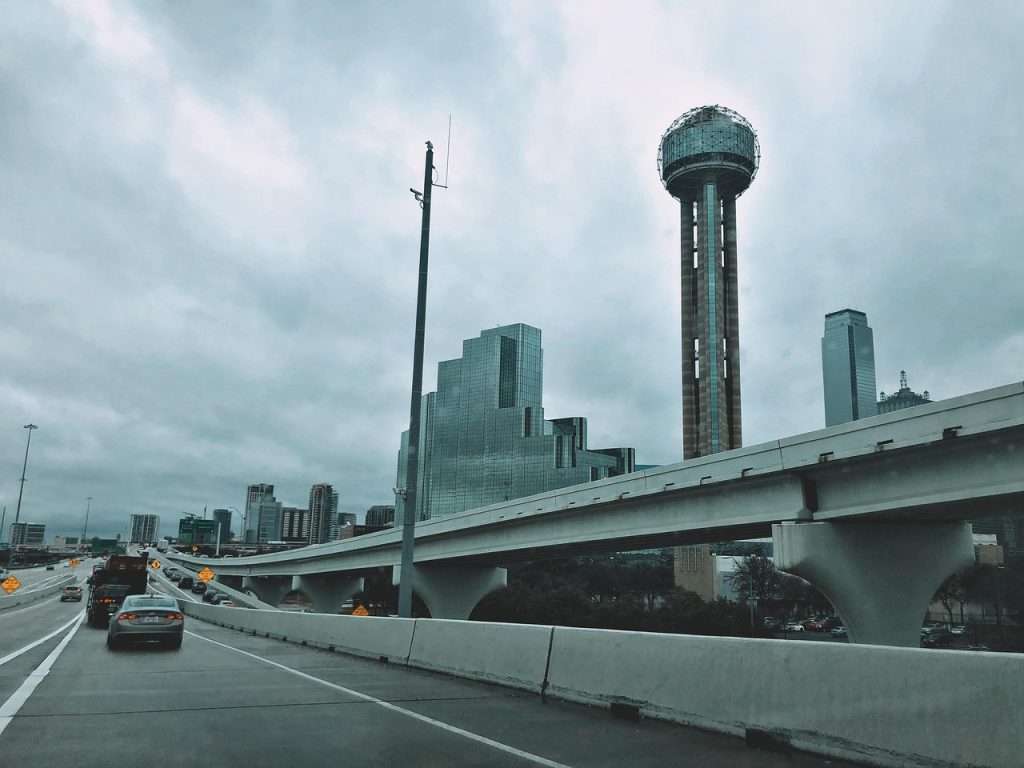
Most serious Grand Prairie crashes happen on the city’s high-volume corridors:
- I-20 and I-30, the two east-west interstates that carry Dallas to Fort Worth commuters and heavy truck traffic through the city.
- State Highway 360, the north-south route that ties Grand Prairie to Arlington and the airport corridor.
- State Highway 161 (the President George Bush Turnpike), where high speeds and toll-lane merges raise the stakes of any mistake.
- Belt Line Road, Great Southwest Parkway and Carrier Parkway, busy surface streets lined with businesses, signals and turning traffic.
Where the crash happened also matters for where a case is filed. Grand Prairie stretches across Dallas, Tarrant and Ellis counties, and Texas law generally places a lawsuit in the county where all or a substantial part of the events happened (Tex. Civ. Prac. & Rem. Code § 15.002). We handle that for you.
The Texas Rules That Decide Your Claim
You have two years. Texas generally requires a personal injury lawsuit to be filed no later than two years after the day the cause of action accrues, which in a car crash is usually the day of the accident. A wrongful death claim has the same two years, counted from the date of death (Tex. Civ. Prac. & Rem. Code § 16.003). For an injured child, the clock does not run while the child is under 18 (§ 16.001).
Shared fault does not end your case. Texas uses proportionate responsibility. You can recover as long as you are not more than 50 percent responsible for the crash, and your damages are reduced by your own percentage of fault (§§ 33.001 and 33.012). That is why insurers so often try to pin part of the blame on you.
Crashes with city vehicles have a shorter notice deadline. If a city or other government vehicle hit you, the Texas Tort Claims Act entitles the government to written notice of the claim within six months of the crash, and a city charter can set its own notice period (§ 101.101). Call us quickly if a government vehicle was involved.
Insurance After a Texas Crash: Minimum Limits, PIP and Uninsured Drivers
Texas is an at-fault state, so the driver who caused the crash, and that driver’s insurer, is responsible for your losses. Every Texas driver must carry at least $30,000 per injured person, $60,000 per crash for injuries and $25,000 for property damage (Tex. Transp. Code § 601.072). Those minimums are often far less than a serious injury costs.
Your own policy can help close the gap. Texas insurers must include personal injury protection (PIP) and uninsured/underinsured motorist coverage on every auto policy unless a named insured rejects them in writing (Tex. Ins. Code §§ 1952.101 and 1952.152). The PIP coverage Texas requires is $2,500 per person for medical bills and lost income, and many drivers buy more (§ 1952.153). If the other driver had no insurance or not enough, your uninsured/underinsured coverage is often where the rest of your recovery comes from. Send us your declarations page and we will tell you what you have.
What to Do After a Crash in Grand Prairie
- Stop, check on everyone and call 911. Texas law requires drivers in an injury crash to stop and render reasonable assistance (Tex. Transp. Code § 550.021), and to immediately notify the local police when someone is hurt or a car cannot be driven safely (§ 550.026).
- Get the crash report. Officers must file a written report for any crash with an injury, a death or at least $1,000 in apparent property damage, and it goes to TxDOT within 10 days (§ 550.062). That CR-3 report is one of the first things an adjuster reads.
- Take photos and get names. Photograph the vehicles, the intersection or lane, skid marks and your injuries, and get contact information from witnesses.
- See a doctor the same day or the next. Gaps in treatment are the most common reason adjusters cut injury claims.
- Do not give a recorded statement to the other driver’s insurer before you talk to a lawyer.
Common Questions From Grand Prairie Car Accident Clients
Do I have to use my own insurance first?
No. Texas is an at-fault state, so you can claim directly against the driver who caused the crash. Your PIP, if you did not reject it, can pay medical bills and lost income right away while the injury claim moves forward.
The adjuster says I was partly at fault. Is my claim over?
Not if you were 50 percent at fault or less. Your recovery is reduced by your share, not erased.
How long do I have to file?
Generally two years from the date of the crash. Do not wait, because evidence and witness memories fade fast.
What will a lawyer cost me?
Nothing up front. We work on contingency, so our fee comes out of the recovery.
The other driver had no insurance. Can I still recover?
Usually, through your own uninsured motorist coverage, which is on every Texas policy unless it was rejected in writing.
Where would my case be filed?
Usually in the county where the crash happened. In Grand Prairie that can be Dallas, Tarrant or Ellis County, depending on the exact location.
How Moxie Law Group Helps Grand Prairie Crash Victims
We gather the crash report, photos, witness statements and medical records, calculate the full value of your claim, including future care and lost earning capacity, and deal with every insurance company involved so you do not have to. When an insurer will not pay what a claim is worth, we are ready to take it to court.
Moxie Law Group serves North Texas from our Dallas and Lewisville offices, and we also help clients in nearby Mansfield and across Texas, and our Lewisville car accident lawyers handle crashes along I-35E and in Denton County. Call today for a free consultation with a Grand Prairie car accident lawyer.
MOXIE LAW GROUP’S EMPATHY, INTEGRITY, TENACITY
A Call Away, and Ready to Help.
Texas recorded 3,769 traffic deaths in 2025 and more than 244,000 people injured, and many people are finding themselves injured after a car crash in Grand Prairie. If you were hurt in a car accident, Moxie Law Group is here for you. Our personal injury attorneys understand Texas insurance and traffic laws, and we fight for our clients with empathy, integrity, and tenacity. If you have been injured in a car crash, Moxie Law Group is just a phone call away.
Most Importantly, Our Experience Speaks for Itself


